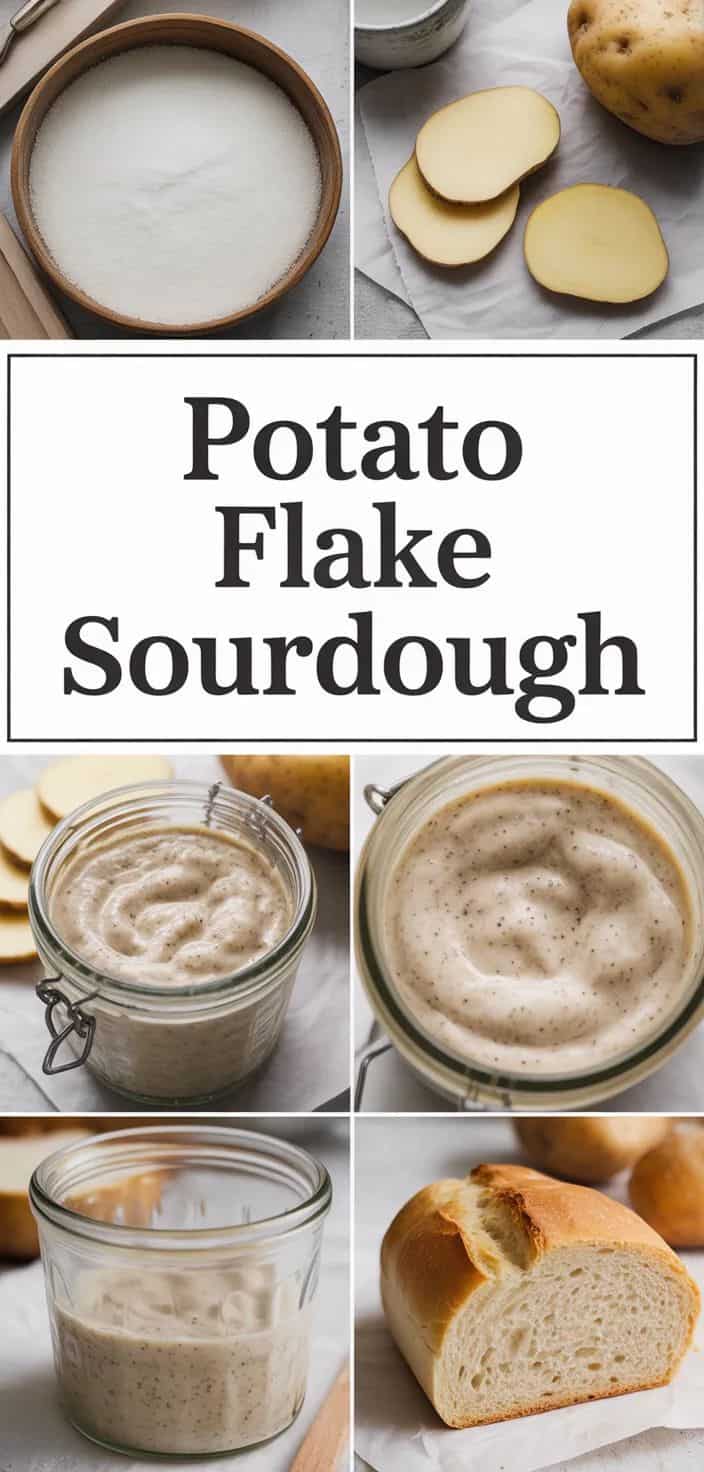
Sourdough Potato Flake Starter: The Sweet, Low-Maintenance Guide
When most people hear “sourdough,” they picture a bubbling jar of flour and water and a crusty, tangy artisan loaf. But there is another player in the fermentation game that deserves your attention: the sourdough potato flake starter.
Often associated with Amish Friendship Bread, this vintage starter is entirely different from its flour-based cousin. It is sweeter, more liquid, and arguably much easier to maintain. If you want to bake pillowy soft sandwich breads, dinner rolls, and cinnamon buns without the intense “sour” tang, this starter is your secret weapon.
What is a Sourdough Potato Flake Starter?
A sourdough potato flake starter uses dehydrated instant potato flakes and sugar as the primary food source for the yeast, rather than wheat flour.
Unlike a traditional starter, which relies on wild yeast captured from the air (and can be temperamental), a potato flake starter is typically kickstarted with commercial active dry yeast. This makes it incredibly reliable and robust. The resulting liquid is thin and milky, smelling sweetly of fermentation rather than acidic or vinegary.
Why Choose Potato Flakes Over Flour?
Why switch to or add a sourdough potato flake starter to your kitchen?
- Low Maintenance: It is much harder to kill. It can sit in the fridge for weeks between feedings.
- The Flavor Profile: It produces a distinctively sweet flavor, making it ideal for pastries and soft sandwich loaves.
- No Discard Waste: Because the feeding ratios are smaller and the fermentation is slower in the fridge, you rarely have to throw any away.
How to Make a Sourdough Potato Flake Starter
Starting this culture is simple. You just need a few pantry staples.
Ingredients:
- 1 packet (2 ¼ tsp) Active Dry Yeast
- ½ cup Warm Water (105°F – 115°F)
- 1 cup Warm Water (separate from above)
- ¾ cup Sugar
- 3 tbsp Instant Potato Flakes
Instructions:
- Activate Yeast: In a small bowl, dissolve the yeast in the ½ cup of warm water. Let it sit for 5–10 minutes until it gets foamy.
- Mix the Base: In a glass jar (at least 1-quart capacity), combine the sugar, potato flakes, and the 1 cup of warm water. Stir until the sugar dissolves.
- Combine: Add the foamy yeast mixture to the jar and stir.
- Ferment: Cover loosely with a coffee filter or a lid left slightly ajar (to let gas escape). Let it sit at room temperature for 24 hours. You should see bubbles rising to the surface.
- Refrigerate: After 24 hours, place the jar in the refrigerator. It is now “established.” Wait 3 to 5 days before your first feeding or baking session.
How to Feed Your Starter
Maintaining a sourdough potato flake starter is incredibly easy. You generally feed it once every 5 to 7 days if you are baking regularly, or once every 10–14 days if you aren’t.
The Feeding Ratio:
- 1 cup Warm Water
- ¾ cup Sugar
- 3 tbsp Instant Potato Flakes
Steps:
- Remove the starter from the fridge.
- Stir in the water, sugar, and potato flakes.
- Let it sit on the counter at room temperature for 8–12 hours until it gets bubbly and active.
- Remove the amount you need for your recipe.
- Return the remaining starter to the fridge.
Baking With Your Starter
This starter doesn’t result in a thick, doughy leaven. When a recipe calls for sourdough potato flake starter, you use the liquid itself.
Because it contains commercial yeast and sugar, it rises bread faster than a wild flour starter. It is famous for creating the “Amish Sourdough” texture—incredibly soft, fluffy, and slightly sweet. It is perfect for:
- Pull-apart dinner rolls.
- Glazed donuts.
- Soft white sandwich bread.
Troubleshooting Tips
- Separation is Normal: You might see a layer of clear liquid on top and white sediment (potato flakes) on the bottom. This is fine! Just give it a good shake or stir before feeding or using.
- Smell Test: A healthy sourdough potato flake starter should smell pleasant, yeasty, and sweet (like alcohol or bread dough). If it smells rotten or looks pink/orange, discard it and start over.
- Metal Spoons: Old wives’ tales say never to use metal spoons. With modern stainless steel, this isn’t an issue, but using a wooden spoon or silicone spatula is always a safe bet.
Conclusion
The sourdough potato flake starter is a nostalgic throwback that deserves a spot in the modern kitchen. It offers a stress-free entry into the world of fermentation, providing delicious, consistent results with minimal effort. Mix up a jar today and enjoy the sweetest homemade bread you’ve ever tasted.